
What's Good About Pro-Abortion Arguments?
Dec 10, 2025Dana Dill
I am unapologetically pro-life. You should be too. Every human life is precious at every stage, from womb to tomb. Because we are made in the image of the glorious God, every person possesses unshakable worth and is owed life, liberty, and the pursuit of joy in Him. To intentionally kill an innocent human being is evil, full stop.
Pro-choice advocates disagree. They argue that a woman has the right to kill the unborn child within her. Their justifications vary, but nearly all of them depend on one crucial assumption: the unborn are not human beings. If the unborn are merely tissue, then abortion is no more morally significant than removing tonsils or pulling wisdom teeth. But if the unborn are human, and they are, then abortion is the deliberate killing of a defenseless, innocent person.
I believe the pro-choice position is deeply wrong. Many who hold it may not be malicious; they are confused. Confusion does not erase responsibility, but it does explain how sincere people can embrace such a destructive idea.
The Strange Gift of Pro-Abortion Arguments
Still, the pro-choice movement gives us one strangely useful gift: it provides endless examples of logical fallacies. A logical fallacy is simply an error in reasoning. Pro-abortion arguments rely almost entirely on these errors. Their case only works if their audience fails to notice the tricks.
What follows are some of the most common and most foolish fallacious arguments used to defend abortion.
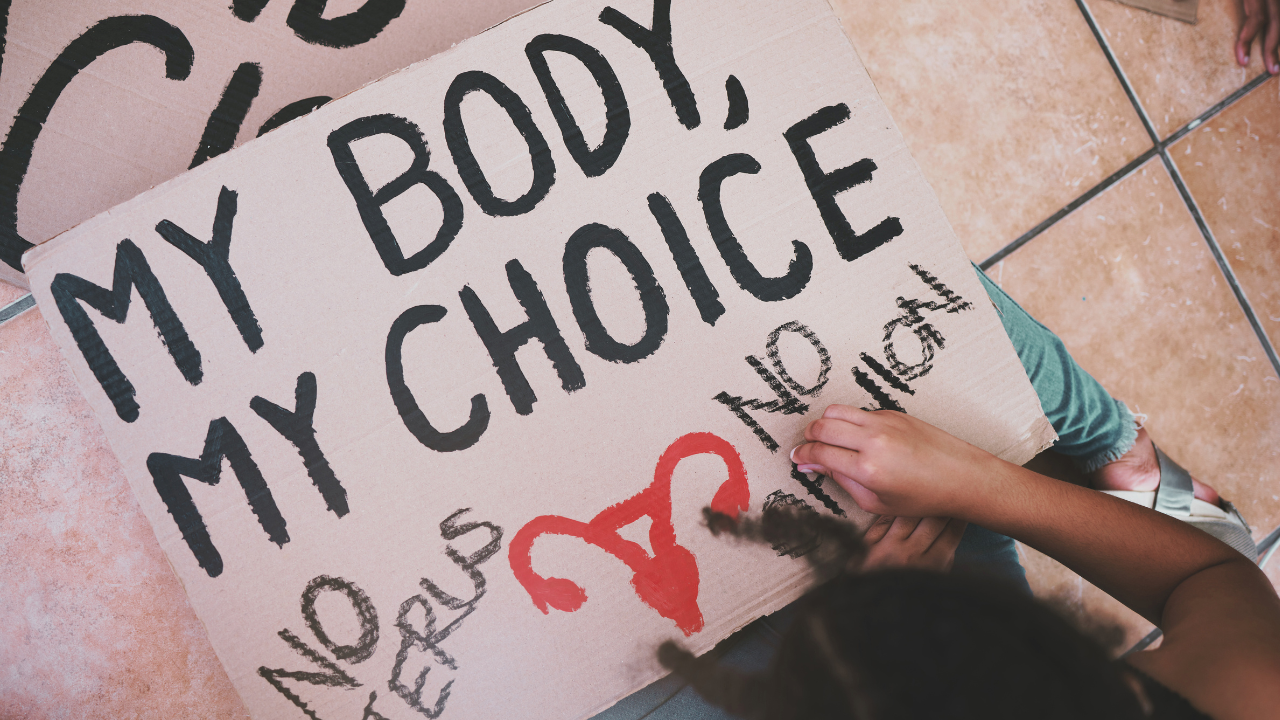
“No uterus, no opinion” (Genetic Fallacy)
A genetic fallacy dismisses a claim based on who makes it rather than whether it is true. This slogan rejects an argument about unborn human life simply because it comes from a man. But whether abortion kills an innocent human being does not depend on the speaker’s anatomy. Truth is not determined by the arguer’s gender, so this move avoids the issue entirely.
“My body, my choice” (False Analogy / Question Begging)
This argument relies on a false analogy. It treats abortion as if it involves only one body, the pregnant woman, while completely ignoring the separate, living human inside her. Choosing what to do with your own body does not give you the right to intentionally kill another person. The unborn is not part of the mother’s body in the way an organ or a tumor is. This slogan assumes the conclusion it should be proving (i.e. question begging): that the unborn has no independent value or rights. It avoids the real moral question, “What about the babies body?” by confusing the body of the child with the body of the mother.
“I am personally against abortion, but I do not have the right to tell others what to do” (Self-Contradiction / Category Error)
This claim contradicts itself. If abortion is wrong, then it is wrong for everyone, not just for the individual who happens to feel that way. No one says, “I am personally against abuse, but I should not tell others not to abuse.” Moral are not private preferences (i.e. category error). This argument also assumes moral relativism, the idea that right and wrong depend on personal opinion, yet it smuggles in an objective moral judgment by claiming abortion is wrong. It collapses under its own weight. If killing the unborn is truly wrong, the only reasonable response is to oppose it for everyone, especially for the vulnerable human who cannot defend himself or herself.
“You want to control women’s bodies” (Ad Hominem)
An ad hominem attacks the person rather than addressing the argument. Instead of engaging the moral question, “What is the unborn?” this response smears the pro-life advocate’s motives. It pretends the debate is about controlling adult women rather than protecting the distinct human being in the womb. It avoids the actual argument by attacking the arguer.
“It’s just a clump of cells” (Begging the Question)
Begging the question assumes the very point that must be proven. Calling the unborn “a clump of cells” simply presumes it is not a human being, which is precisely the question at stake. Biology shows the unborn is a living, whole, developing human organism. The slogan assumes its conclusion and then uses that assumption as its argument.
“No other law controls what people can do with their bodies” (False Analogy / Begging the Question)
This fallacy rests on a false analogy by pretending abortion is merely about a woman’s body. But the moral concern is about the other body inside her: the unborn human. The claim ignores this second human and then argues as if only one body is involved. This also is a great example of question begging in that it assumes the very point in dispute. It compares abortion to ordinary bodily-autonomy laws while overlooking the unique reality that another human life is intentionally ended.
“What about cases of rape?!” (Red Herring)
A red herring (named for stinky fish that would take hunting dogs off their sniffing trail) distracts from the main issue by bringing up an emotionally charged, but separate, concern. Rape is horrific and evil. But, how a baby was conceived tells us nothing of whether the unborn is a human being with the right to life. The appeal shifts the discussion away from the central moral question, “What is the unborn?” and toward an emotionally weighty, but ultimately irrelevant tragedy.
“This will cause women to die” (Category Error / Appeal to Emotion)
A category error confuses two fundamentally different kinds of things. Abortion is the intentional killing of the unborn. Emergency medical treatment, like treating an ectopic pregnancy, aims to save the mother’s life, even if the child tragically cannot survive. The aims, methods, and moral categories are entirely different. Abortion is never necessary to save life and only intends to kill it. To lump emergency care into the category of “abortion” is to treat entirely different activities as though they were the same.
“If you don’t like abortion, don’t have one” (Non Sequitur)
A non sequitur is a conclusion that does not logically follow from the premise. This statement treats abortion like a preference (e.g. your favorite ice cream flavor), not a moral issue. If abortion kills an innocent human, then “just don’t do it yourself” is irrelevant. Moral wrongs don’t become acceptable simply because someone chooses not to participate in them.
“The fetus can’t feel pain until later, so abortion before that is fine” (Red Herring / Arbitrary Standard)
This argument shifts the focus to pain, which is something never used to determine whether born humans deserve protection. People under anesthesia, or the permanently unconscious may not feel pain, but they still possess human value. The argument introduces a standard created out of thin air that avoids the real question of human identity.
“Abortion should be allowed because some children will be born into poverty” (Appeal to Consequences / Begging the Question)
An appeal to consequences argues something is true or morally acceptable because of the potential outcomes. Poverty is tragic, but humans do not lose their right to life based on economic conditions. Who would kill a two year old because their poor and life will be hard? Killing the poor is not a moral solution to poverty. The argument tries to justify a moral wrong based on predicted hardships. Also, it again assumes the unborn are not people, so question begging.
“Banning abortion forces women to remain pregnant” (Straw Man)
A straw man misrepresents an opponent’s position so it can be easily dismissed. The pro-life view is not “forcing pregnancy,” but recognizing that pregnancy already involves a second human being with rights. The issue is not forcing something to happen but preventing something (i.e. the intentional killing of an existing human life) from happening. This claim distorts the pro-life position into something it isn’t to make it easier to dismiss.
“If abortion is banned, people will get unsafe, illegal abortions” (Appeal to Fear / Question Begging)
An appeal to fear tries to win the argument by scaring rather than reasoning. Whether abortion harms women does not answer the moral question of whether abortion kills an innocent human (again, question begging too). The possibility of someone doing something dangerous illegally does not make the act itself morally permissible. It is dangerous to murder police. Does outlawing that in order to protect the offender make sense to you?
“Women need abortion to be equal to men.” (False Premise / Circular Reasoning)
This argument assumes equality requires the ability to kill the unborn. It circularly defines equality as “freedom from pregnancy” and then concludes that abortion provides that freedom. But true equality is not achieved by eliminating another human being. The premise is false, so the conclusion collapses.
“You can’t impose your morality on others.” (Self-Refuting Claim)
This is self-defeating. It refutes itself with nothing more than being said. Saying “You can’t impose morality” is itself an attempt to impose a moral rule on others. All laws impose morality. All laws against assault, theft, abuse, discrimination, etc. are imposing morality on people and I think we should be cool with that. The real question is, “Is killing the unborn immoral?” This claim destroys itself the moment it is uttered.
“Most Americans support abortion, so it should be legal.” (Appeal to Popularity)
Even if it were true (which is a big “if”), it doesn’t make it right or wrong. An appeal to popularity says a view is correct because many people believe it. But truth and morality are not determined by public opinion. Large majorities have supported deeply immoral practices in the past (slavery, segregation, eugenics). Moral realities don’t change with the polls.
A House Built on Fallacies
At the end of the day, every pro-choice argument collapses under the weight of one simple question: What is the unborn? If the unborn is not human, no justification for abortion is needed. If the unborn is human, no justification for abortion is adequate. The science is clear. The philosophical case is strong. The testimony of God’s world and God’s Word is unmistakable. From the moment of conception, we are dealing with a living, whole, distinct human being.
The pro-abortion position is built exclusively on logical fallacies. It cannot stand on truth so it leans on confusion. It cannot face the facts so it hides behind slogans. Once the fallacies fall away, the position collapses.
Flannery O’Connor once wrote, “The truth does not change according to our ability to stomach it.” The same is true here. No amount of emotional language or rhetorical sleight of hand can change what abortion is. Human life is worth defending, especially when it is small, silent, and hidden from view.
So the pro-abortion argument is confused, built entirely on error, and always produces evil. Yet it offers one useful thing: a masterclass in logical fallacies, showing us what to avoid as we train our minds to live by truth.
